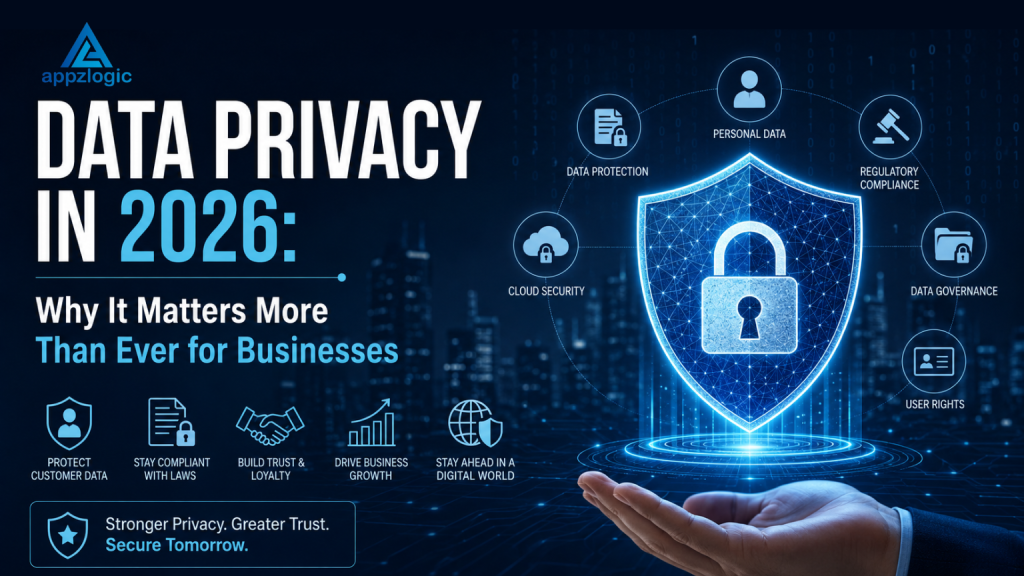
Data Privacy in 2026: Why It Matters More Than Ever for Businesses
Data privacy is now a top priority for organizations. As companies gather more customer information, they must implement robust data protection and privacy practices to keep sensitive data secure and maintain trust. With more personal data being collected, businesses have a bigger responsibility to protect it. Customers are watching how their data is handled, and governments are tightening data privacy laws. At the same time, cybercriminals are finding new ways to steal information. Because of all this, data privacy is no longer just about checking out a compliance box. Companies that prioritize privacy reduce risk, build trust, strengthen their brand, and set themselves apart from the competition.
What is Data Privacy?
Data privacy means collecting, using, storing, sharing, and deleting personal information in ways that give people control over their data. Organizations need to handle sensitive information openly, securely, and ethically. Personal data can include names, email addresses, phone numbers, financial details, health records, biometric data, IP addresses, location, and browsing history. Good data privacy practices answer important questions, such as: What data is collected? Why is it correct? How will it be used? Who can access it? How long will it be kept? Can users request corrections or deletions? By being clear about their data privacy policies and managing data responsibly, businesses can protect information, comply with regulations, and earn lasting trust from customers.
Why is Data Privacy Important?
Building Customer Trust
Trust is a key factor in today’s digital world. Customers are more willing to share their information with companies that are honest and careful about how they use data. When businesses clearly explain how they collect, store, and protect data, they can build stronger relationships and earn customer loyalty.
Regulatory Compliance
Governments worldwide have set strict data privacy rules that require organizations to handle personal information responsibly.
Failure to comply with these regulations can result in:
- Significant financial penalties
- Legal action
- Regulatory investigations
- Operational disruptions
- Damage to brand reputation
Following privacy rules is now an important part of managing business risks, especially as regulations become stricter.
Reducing Cybersecurity Risks
Keeping more customer data increases a company’s risk of cyberattacks. By collecting only, the data they truly need and using it for clear purposes, organizations can reduce the risk of sensitive information being exposed in a breach.
Enabling Responsible AI
Artificial Intelligence depends on data to learn and make decisions. Without strong privacy controls, AI systems could reveal sensitive information or introduce unintended bias. Good privacy practices help AI stay ethical, open, and aligned with evolving rules.
Protecting Business Reputation
Just one privacy issue can seriously hurt customer trust and damage a company’s reputation.
Companies known for respecting customer privacy often see benefits such as:
- Higher customer retention
- Stronger brand reputation
- Increased investor confidence
- Greater competitive differentiation
Data Privacy vs. Data Security
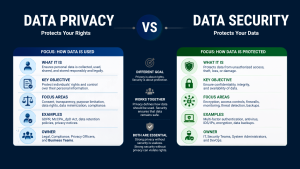
People often confuse these terms, but they mean different things when it comes to managing information.
Data privacy focuses on how personal information should be collected, processed, and shared, ensuring that organizations respect individuals’ rights and obtain appropriate consent.
Data security is about protecting information from being accessed, stolen, altered, or destroyed by using tools such as encryption, firewalls, multi-factor authentication, and access controls.
In short, data privacy concerns how personal information is collected and used, while data security focuses on protecting that information with tools such as encryption, IAM, cloud security, and other controls.
Major Data Privacy Laws and Regulations
As digital change accelerates worldwide, governments are strengthening privacy laws, and some key regulations stand out.
Some of the most influential regulations include:
General Data Protection Regulation (GDPR)
The European Union’s GDPR remains one of the world’s most comprehensive privacy laws. It provides individuals with extensive rights over their personal data, including the right to access, correct, delete, and transfer their information.
Companies that serve people in the EU must demonstrate accountability and transparency and comply with the law when handling personal data.
Digital Personal Data Protection (DPDP) Act – India
India’s Digital Personal Data Protection Act establishes a modern framework for processing digital personal information.
The legislation emphasizes:
- User consent
- Purpose limitation
- Data fiduciary responsibilities
- Protection of children’s data
- Breach reporting requirements
As India’s digital economy grows, complying with the DPDP Act is becoming increasingly important for businesses in the country.
California Consumer Privacy Act (CCPA)
The CCPA provides California residents with greater control over their personal information by allowing them to know what data is collected, request deletion, and opt out of certain types of data sharing.
Industry-Specific Regulations
Several industries also follow specialized privacy standards, including:
- HIPAA for healthcare
- PCI DSS for payment card security
- PIPEDA in Canada
- LGPD in Brazil
- Companies that operate in multiple countries often have to comply with different privacy rules simultaneously, which complicates matters.
Common Data Privacy Challenges Businesses Face
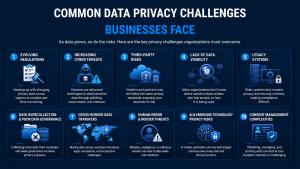
Even though awareness is growing, many organizations still struggle to implement effective privacy programs.
Rapidly Evolving Regulations
Privacy laws keep changing around the world, making it harder for organizations operating in different countries to remain compliant. Keeping policies, contracts, technology, and processes up to date with new rules takes ongoing effort.
Increasing Cyber Threats
Cybercriminals are increasingly targeting sensitive customer information through ransomware, phishing, insider threats, and stolen credentials. Even companies with strong cybersecurity can still be at risk if they don’t have good privacy controls.
Managing Third-Party Vendors
Many businesses depend on cloud providers, software vendors, payment processors, and outsourcing partners who also handle customer information. If companies don’t carefully check and manage these vendors, working with third parties can create serious privacy risks.
Data Visibility Challenges
Organizations often struggle to answer fundamental questions such as:
- Where is sensitive data stored?
- Who has access to it?
- How long is it retained?
- Is it encrypted?
If companies don’t know where all their data is or who can access it, staying compliant becomes very difficult.
Legacy Systems
Many older business systems lack modern privacy features such as encryption, detailed access controls, automatic data retention, or audit logs. Updating these legacy systems is still one of the hardest challenges for large companies.
Human Error
Employees are still a major source of privacy problems, whether by accidentally exposing data, using weak passwords, falling for phishing, or mishandling sensitive information. Regular training is essential to reduce these risks.
Best Practices for Protecting Data Privacy
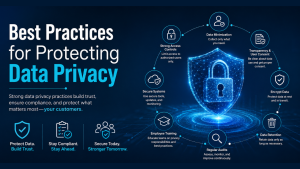
Building a strong privacy program takes more than just using security tools. It requires a broader, well-coordinated plan.
Organizations should adopt a comprehensive approach that includes:
- Embedding Privacy by Design into every application and business process
- Collecting only the data necessary for business purposes
- Encrypting sensitive information both at rest and in transit
- Implementing role-based access controls and multi-factor authentication
- Conducting regular privacy impact assessments
- Establishing clear data retention and deletion policies
- Keep a close and ongoing watch on third-party vendors.
- Performing periodic compliance audits
- Educating employees on privacy responsibilities
- Preparing incident response and breach notification plans
Privacy should be part of a company’s culture, not just another task on a compliance checklist.
The Future of Data Privacy
The future of data privacy will be shaped by Artificial Intelligence (AI), cloud computing, new privacy regulations, and higher customer expectations. Organizations will use more Privacy-Enhancing Technologies (PETs), AI governance, and automated privacy tools to protect data and lower risks. Businesses that focus on data protection, transparency, and responsible practices will build customer trust, meet regulations, and gain an edge in the digital world.
How Appzlogic Helps Organizations Build Privacy-First Businesses
At Appzlogic, we help organizations become privacy-first businesses by offering end-to-end data privacy consulting, compliance support, cybersecurity services, AI governance, cloud security, Identity and Access Management (IAM), and enterprise data protection. Our experts guide businesses through the GDPR, the DPDP Act, the CCPA, and other global privacy rules while boosting security, reducing risk, and protecting sensitive data. With services such as privacy assessments, VAPT, security reviews, risk management, security training, and ongoing monitoring, we help organizations achieve compliance, build trust, and accelerate secure digital transformation.
Final Thoughts
Data privacy is no longer just an IT or legal concern; it’s now a top business priority. As rules become stricter and customers care more about how their data is used, companies need to be proactive about privacy. Businesses that are transparent, improve their data privacy regulations, and use modern privacy-enhancing technologies will lower their risks, build stronger customer relationships, and gain a lasting advantage over competitors. In today’s digital world, protecting personal data also means protecting your business, your reputation, and your customers’ trust.
Frequently Asked Questions
Data privacy is the responsible collection, use, storage, and protection of personal information while respecting individual rights.
It helps protect sensitive information, build customer trust, ensure regulatory compliance, and reduce cybersecurity risks.
Key regulations include GDPR (EU), DPDP Act (India), CCPA (California), HIPAA (US), and LGPD (Brazil).
Businesses should implement encryption, access controls, employee training, regular audits, and Privacy by Design practices.
The future will focus on AI governance, stronger privacy regulations, Privacy-Enhancing Technologies (PETs), and greater consumer control over personal data.