Why Businesses Need Data Privacy Consulting Services in 2026
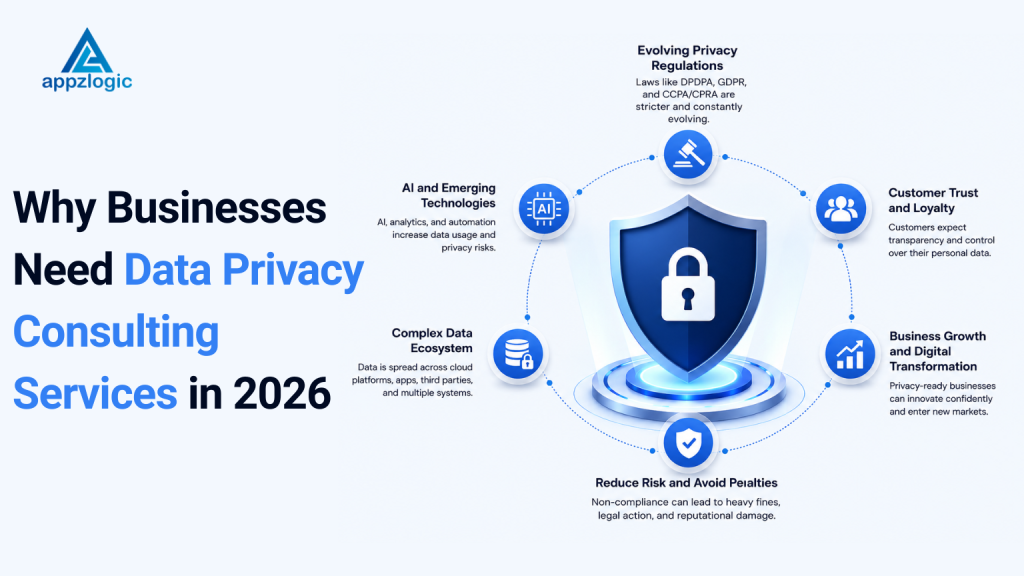
Data privacy is no longer just about following the rules. By 2026, it will be a core business responsibility that affects customer trust, cybersecurity, AI, regulatory risk, and digital growth. Organizations now manage large amounts of information through websites, apps, cloud services, CRM systems, AI tools, analytics, employee platforms, and third-party providers. At the same time, data privacy regulations are getting tougher, customers are paying closer attention to how their data is used, and AI is raising new questions about data access, processing, storage, and management. Laws such as India’s Digital Personal Data Protection Act (DPDPA), the General Data Protection Regulation (GDPR), and the California Consumer Privacy Act/California Privacy Rights Act (CCPA/CPRA) require businesses to know what personal data they collect, why they collect it, where it is stored, who can access it, and how it is protected. As a result, data privacy consulting services are becoming more valuable. Data privacy consultants help companies turn complex rules into practical steps, controls, technology, and management systems that support data privacy compliance.
What Are Data Privacy Consulting Services?
Data privacy consulting services help organizations identify, manage, and reduce risks related to how personal and sensitive data is collected, used, stored, shared, and deleted. Instead of treating privacy as just paperwork or a compliance task, effective data privacy consulting brings together people, processes, technology, security, and management to create a strong data privacy program. Depending on a business’s needs, these services can include privacy readiness checks, support for DPDPA, GDPR, and CCPA/CPRA compliance, data discovery and classification, mapping personal data, privacy risk reviews, managing consent and preferences, handling Data Subject Rights (DSR), Data Protection Impact Assessments (DPIAs), third-party risk checks, privacy policies, management systems, Privacy by Design, and strategies for keeping or deleting data. Companies can also use Privacy Enhancing Technologies (PETs) and improve AI privacy and data management as AI and analytics become more common. The goal is not just to meet requirements once, but to build a privacy governance framework that can grow and adapt as laws, technology, business needs, and data risks change.
Data privacy is now a top business priority, not just a compliance task. As organizations expand their digital presence, use more AI, move data to the cloud, and rely on more third-party platforms, protecting personal and sensitive information is becoming more challenging. At the same time, new regulations like India’s DPDPA, GDPR, and CCPA/CPRA are raising expectations for transparency, consent, data rights, security, retention, and accountability. For businesses, strong data privacy compliance is no longer just about avoiding fines. It can help reduce data risk, strengthen cybersecurity, build customer trust, improve resilience, and support responsible AI and digital innovation. In 2026, organizations that know where their data is, set up clear privacy governance, and build privacy into their technology and business processes will be better prepared to grow safely and responsibly.
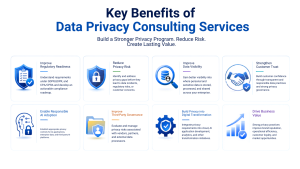 Data privacy consulting helps organizations move beyond basic compliance and build a strong, scalable privacy program that fits their needs. By combining regulatory knowledge with data governance, cybersecurity, and technology controls, businesses can better understand and manage privacy risks. A structured privacy program can improve regulatory readiness, data visibility, customer trust, and third-party governance. It also helps organizations identify privacy gaps early and implement the right controls before problems lead to data incidents, compliance issues, or reputational harm. As businesses use more AI, cloud platforms, analytics, and other digital tools, privacy consulting services help build data protection into these changes from the start. This allows organizations to innovate while keeping data practices responsible. In the end, good privacy management is not just about lowering risk. It can boost customer confidence, support responsible AI use, improve resilience, and create long-term business value.
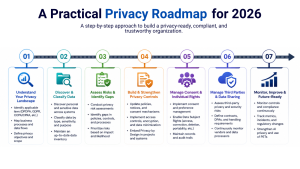 Building a strong privacy program management takes more than just creating policies or reacting to new regulations. Organizations need a structured, ongoing approach that connects regulatory requirements with data governance, security, technology, and business operations. A practical privacy journey starts by understanding the rules that apply and mapping how personal data moves through the organization. Next, businesses should find and classify sensitive data, assess privacy risks, identify compliance gaps, and implement the right technical and organizational controls. Organizations should also set up strong processes for managing consent, individual privacy rights, third-party data sharing, and vendor risk. Privacy by Design should be built into new apps, AI systems, products, and digital projects from the start, not added later. Most importantly, privacy is not a one-time task. Ongoing monitoring, regular risk checks, measurable controls, and using Privacy Enhancing Technologies (PETs) can help organizations stay prepared as regulations, technology, and data risks change.
Final Thoughts
By 2026, businesses can no longer treat data privacy as just a legal or compliance issue. Privacy is now connected to cybersecurity, artificial intelligence, cloud transformation, data governance, customer experience, and enterprise risk management. Organizations with mature enterprise data privacy programs do more than reduce regulatory risk. They create a trusted foundation for responsible data use, secure AI adoption, digital transformation, and stronger relationships with customers and partners. A mature privacy program answers four key questions: What data do we have? Where is it? Who can use it? Are we using it responsibly? If organizations cannot answer these questions clearly, it may be time to strengthen their data privacy strategy and privacy governance framework.
If your organization is preparing for DPDPA, GDPR, or CCPA/CPRA compliance, improving data visibility, strengthening third-party governance, or managing AI data privacy risks, Appzlogic can help you build a practical and scalable privacy program. Our Data Privacy Consulting Services can help you assess privacy gaps, strengthen governance, protect sensitive information, improve regulatory readiness, and embed privacy into AI and digital transformation projects.
Frequently Asked Questions
Data privacy consulting services help businesses assess privacy risks, comply with regulations, establish governance frameworks, manage personal data responsibly, and strengthen data protection practices.
Businesses face evolving privacy regulations, increasing cyber threats, complex data ecosystems, and growing customer expectations. Privacy consultants help organizations reduce regulatory risks and build stronger data governance.
AI systems may process large volumes of personal or sensitive data. Businesses need privacy-by-design controls, clear data-use policies, access restrictions, risk assessments, and human oversight to manage AI-related privacy risks.
Appzlogic helps businesses evaluate privacy readiness, identify compliance gaps, establish data-governance practices, and align their processes with regulations such as DPDPA, GDPR, and CCPA.
Yes. Any organization that collects employee, customer, vendor, or website-user data may have privacy obligations, regardless of its size.