
Shirudo: Can AI Protect Software Before Developers Fix It?
Finding a vulnerability in software is only the beginning of a much larger problem. Developing a security patch, testing its compatibility and deploying it across thousands of systems can take days or even weeks, leaving applications exposed to potential cyberattacks. On November 23, 2026, OpenAI and Cisco introduced Shirudo, an open-source security runtime designed to address this critical gap by protecting running Linux systems while developers prepare and deploy permanent security patches.
The project brings together OpenAI’s expertise in artificial intelligence and Cisco’s experience in cybersecurity and infrastructure management, exploring how AI agents can help defend software against emerging threats without interrupting essential services.
What Is Shirudo?
Shirudo, which takes its name from the Japanese word for shield, is an open-source runtime that enables security teams to develop, test and deploy temporary protections against software vulnerabilities without restarting the affected systems.
Instead of completely blocking a system operation that could also be essential to legitimate application requests, Shirudo aims to identify and prevent the specific behaviour associated with an exploit, allowing applications to continue functioning while security teams work on a permanent solution.
The project leverages eBPF technology, which enables programmable functionality within the Linux kernel without requiring modifications to its original source code, while also supporting certain application-level protections.
How OpenAI and Cisco Tested Shirudo
Perhaps the most interesting aspect of the announcement is a controlled experiment involving Elasticsearch, a widely used distributed search and analytics engine.
During the experiment, researchers used OpenAI’s Codex to generate a temporary security shield against Java4Shell, a vulnerability affecting OpenJDK. The protection was attached to a running Elasticsearch process and successfully blocked the attempted exploit without requiring a service restart.
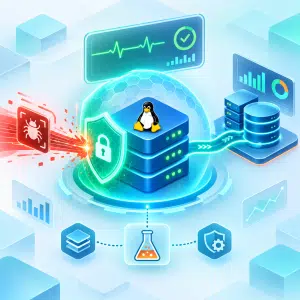
According to Cisco’s official announcement, the objective is to enable infrastructure to respond more quickly to emerging security threats while keeping deployment decisions under human control.
Why Shirudo Matters for Software Development
For industries such as banking, healthcare, e-commerce and cloud computing, taking an application offline to implement a security update can disrupt thousands of users, interrupt business operations and result in substantial financial losses.
Shirudo introduces an interesting approach to this challenge by bringing AI-powered cybersecurity closer to the software development lifecycle, where developers and security engineers could potentially investigate vulnerabilities, generate temporary protections and validate their effectiveness before deploying permanent fixes.
As organisations increasingly adopt Artificial Intelligence and Machine Learning solutions, technologies that combine intelligent automation with runtime security could become particularly valuable in building more resilient enterprise applications.
The Future of AI-Powered Cybersecurity
Shirudo is still an emerging technology, and its initial demonstration should not be interpreted as proof that AI can protect every application against every vulnerability. Traditional security testing, patch management and human oversight remain essential.
However, the collaboration between OpenAI and Cisco highlights an important possibility for the future of software engineering, where artificial intelligence contributes not only to building applications but also to protecting them throughout their operational lifecycle.
Developers and security researchers can explore the project through its official GitHub repository and contribute to its development.
At Appzlogic, we help businesses explore intelligent technologies and build secure, scalable software solutions. Contact us to discover how AI-driven software engineering can support your organisation’s digital transformation.
Frequently Asked Questions
Shirudo is an open-source security runtime developed by OpenAI and Cisco to protect running Linux systems against software exploits while permanent security patches are being prepared and deployed.
Shirudo enables the deployment of targeted security mechanisms called shields that can detect and block specific exploit behaviours without necessarily restarting the affected application. It uses technologies such as eBPF and application-level protections.
Yes, Shirudo is an open-source project released under the BSD 2-Clause licence. Developers and cybersecurity professionals can access its source code through the official Shirudo GitHub repository.
Shirudo could help mitigate certain zero-day vulnerabilities if a suitable protective shield can be developed, tested and deployed. However, it does not guarantee protection against every unknown or emerging security threat.
Shirudo enables AI agents to assist with vulnerability investigation, generate protective code and test temporary security mechanisms. Security teams retain control over which protections are approved and deployed.
Yes, one of Shirudo's primary objectives is to deploy temporary security protections while Linux applications remain operational, potentially reducing service interruptions during the security patching process.
In a controlled experiment, OpenAI used Codex to generate a protective shield that successfully blocked a Java4Shell exploitation attempt against a running Elasticsearch service without restarting it.
No, Shirudo provides temporary protection against specific exploits rather than permanently resolving underlying software vulnerabilities. Regular security updates, vulnerability management and software testing remain essential.
Traditional cybersecurity solutions often focus on threat detection, access control and attack prevention. Shirudo focuses on deploying targeted runtime protections against specific vulnerabilities while permanent software fixes are being implemented.
Shirudo is currently pre-release software. Organisations should evaluate its technical requirements, compatibility, performance and security implications in controlled testing environments before considering production deployment.