What is GRC (Governance, Risk, and Compliance)? A Complete Guide for Modern Businesses
What is GRC?
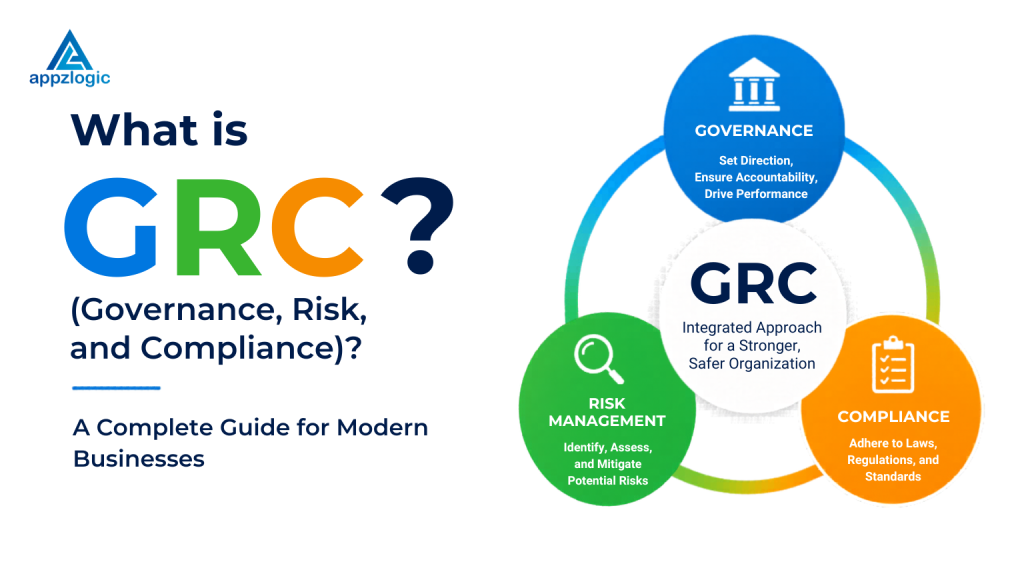
Governance, Risk, and Compliance (GRC) is a framework that helps organizations manage these three areas together in a coordinated way.
The pillars of the GRC framework combine:
- Governance
Governance means having the right policies, processes, and decision-making structures in place to help an organization reach its goals.
Key governance activities include establishing corporate policies and procedures, defining roles and responsibilities, ensuring accountability and transparency, aligning IT and business strategies, and monitoring organizational performance.
- Risk Management
Risk management involves identifying, assessing, reducing, and monitoring risks that could impact business operations.
Common risk categories include cybersecurity risks, operational risks, financial risks, third-party risks, legal and regulatory risks, and reputational risks.
- Compliance
Compliance is about ensuring organizations follow laws, regulations, industry standards, and their own policies.
Examples include GDPR, ISO 27001, HIPAA, PCI DSS, SOC 2, NIST Framework, and industry-specific regulations.
Why is GRC Important?
Organizations now operate in a world full of rules and risks. Without a clear GRC strategy, they may run into compliance issues, security challenges, inefficiencies, and even financial penalties.
Benefits of GRC
- Better Risk Visibility: GRC helps organizations identify and assess risk management and compliance across every department, providing a comprehensive view of potential threats.
- Improved Regulatory Compliance: A robust GRC framework helps organizations stay compliant with evolving regulations and reduces the risk of fines or legal issues.
- Better Decision-Making: Leaders receive up-to-date information on risks and compliance, enabling them to make smarter decisions.
- Operational Efficiency: By bringing governance, risk, and compliance activities together, organizations can cut out duplicate work and reduce administrative tasks.
- Stronger Cybersecurity: Cybersecurity GRC frameworks help organizations proactively manage security by identifying weaknesses and implementing the right controls.
- Greater Stakeholder Confidence: Good governance and compliance build trust with customers, partners, investors, and regulators.
How Does GRC Work?
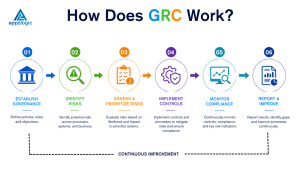
GRC is a system that integrates governance policies, risk management, and compliance into a single, central framework.
Step 1: Establish Governance Policies
Organizations define their business goals, set policies and standards, and assign responsibilities to align IT governance with business objectives.
Step 2: Identify Risks
Organizations identify potential enterprise risk assessments across their business processes, IT systems, vendors, and operations.
Step 3: Assess and Prioritize Risks
They evaluate how likely and serious each risk is, so they can focus on the most important ones.
Step 4: Implement Controls
Organizations put security controls, safeguards, and compliance measures in place to reduce their risks.
Step 5: Monitor Compliance
Ongoing monitoring helps organizations stay compliant with regulations, standards, and their own policies.
Step 6: Reporting and Improvement
Regular reports show how well organizations manage risks and compliance, helping them continue to improve.
Key Components of an Effective GRC Framework
A strong GRC program typically includes:
Policy Management
- Policy creation and maintenance
- Policy distribution and acknowledgment
- Policy review and updates
Risk Assessment
- Risk identification
- Risk scoring and prioritization
- Risk treatment planning
Compliance Management
- Regulatory tracking
- Compliance audits
- Gap assessments
Internal Controls
- Access controls
- Security controls
- Process controls
Audit Management
- Internal audits
- External audit preparation
- Audit documentation
Continuous Monitoring
- Real-time risk monitoring
- Compliance dashboards
- Automated alerts and reporting
How Do Organizations Implement an Effective GRC Strategy?
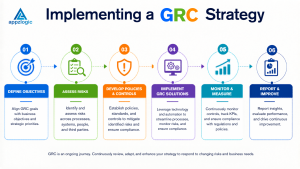
GRC implementation requires organizations to have a clear, company-wide plan.
-
Define Business Objectives
Start by ensuring GRC efforts align with the organization’s goals and top priorities.
Questions to consider:
- What risks could impact business growth?
- Which regulations apply to the organization?
- What governance structures are needed?
-
Conduct a Risk Assessment
Identify existing and emerging risks across:
- Technology
- Operations
- Finance
- Vendors
- Compliance
A thorough risk assessment forms the foundation of a strong GRC program.
-
Develop Policies and Controls
Create clear policies and implement controls to address the risks and rules you have identified.
Examples include:
- Access management policies
- Data protection policies
- Incident response procedures
- Vendor risk management policies
-
Implement GRC Technology
Modern GRC platforms help organizations:
- Automate compliance processes
- Track risks
- Generate reports
- Monitor controls
- Manage audits
Automation makes these processes more efficient and easier to track.
-
Promote a Risk-Aware Culture
GRC isn’t just for IT. Everyone in the organization should understand their role in managing risks and staying compliant.
Organizations should:
- Conduct regular training
- Promote security awareness
- Encourage accountability
-
Continuously Monitor and Improve
GRC is an ongoing process. Organizations need to continually evaluate risks, monitor compliance, and update controls as the business and regulatory environments change.
Common Challenges in GRC Implementation
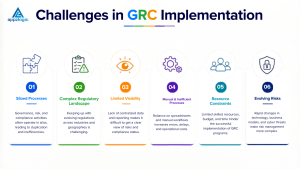
Despite its benefits, organizations often encounter challenges such as:
- Siloed Processes—Independent management of governance, risk, and compliance across departments can lead to inefficiencies.
- Regulatory Complexity: It can be difficult to keep up with changing regulations in different regions.
- Limited Visibility: Without central reporting, organizations struggle to see all their risks and understand their compliance status.
- Manual Processes: Tracking risks and compliance in spreadsheets often leads to errors and wasted time.
- Resource Constraints: Many organizations lack sufficient staff or expertise to manage GRC programs effectively.
Best Practices for Successful GRC Implementation
To make the most of GRC, organizations should:
- Align GRC initiatives with business goals.
- Establish executive sponsorship
- Automate risk and compliance processes
- Implement continuous monitoring
- Conduct regular audits and assessments.
- Maintain updated policies and procedures.
- Foster cross-functional collaboration
- Leverage data-driven decision-making
How Can Appzlogic Help with GRC?
As cybersecurity threats and regulatory demands grow, having the right technology partner is essential for building a strong GRC framework.
Appzlogic supports organizations in improving their Governance, Risk, and Compliance efforts by offering cybersecurity expertise, technology guidance, and enterprise solutions.
Governance Support
- Development of governance frameworks
- Policy and process standardization
- IT governance implementation
- Security governance advisory
Risk Management Services
- Enterprise risk assessments
- Cybersecurity risk analysis
- Vulnerability assessments
- Third-party risk evaluations
- Business continuity planning
Compliance Enablement
- Compliance readiness assessments
- Gap analysis and remediation planning
- Support for ISO 27001, SOC 2, GDPR, HIPAA, and other frameworks
- Audit preparation and documentation assistance
Security and Monitoring
- Continuous security monitoring
- Threat detection and response
- Identity and access management
- Security operations support
Automation and Digital Transformation
- GRC process automation
- Workflow optimization
- Data-driven compliance reporting
- Integration with enterprise platforms
By bringing together industry expertise, cybersecurity skills, and enterprise technology solutions, Appzlogic helps organizations build a proactive and scalable GRC strategy that supports business growth and reduces risk.
Governance, Risk, and Compliance has become a key business function, not just a regulatory requirement. It helps organizations manage complex risks, remain compliant, and achieve their goals. A strong GRC framework makes operations more efficient, strengthens cybersecurity, improves decision-making, and builds trust.
As businesses become more digital, investing in a strong GRC strategy can give them a real advantage. With the right approach and GRC consulting services partner, organizations can turn GRC from a requirement into a tool for resilience and growth.
Frequently Asked Questions
Governance, Risk, and Compliance (GRC) is a framework that helps organizations align business objectives with risk management and regulatory compliance. It integrates governance practices, risk assessment, and compliance requirements into a unified approach.
GRC helps organizations improve decision-making, manage risks effectively, meet regulatory requirements, enhance cybersecurity, and build trust with stakeholders while reducing operational and compliance-related risks.
The future of GRC includes increased automation, AI-driven risk analysis, continuous compliance monitoring, integrated cybersecurity management, and real-time reporting to support proactive decision-making.
Organizations should review their GRC framework regularly, typically annually or whenever significant business, regulatory, or cybersecurity changes occur.
GRC helps organizations identify security risks, implement controls, monitor vulnerabilities, comply with security regulations, and strengthen their overall cybersecurity strategy.