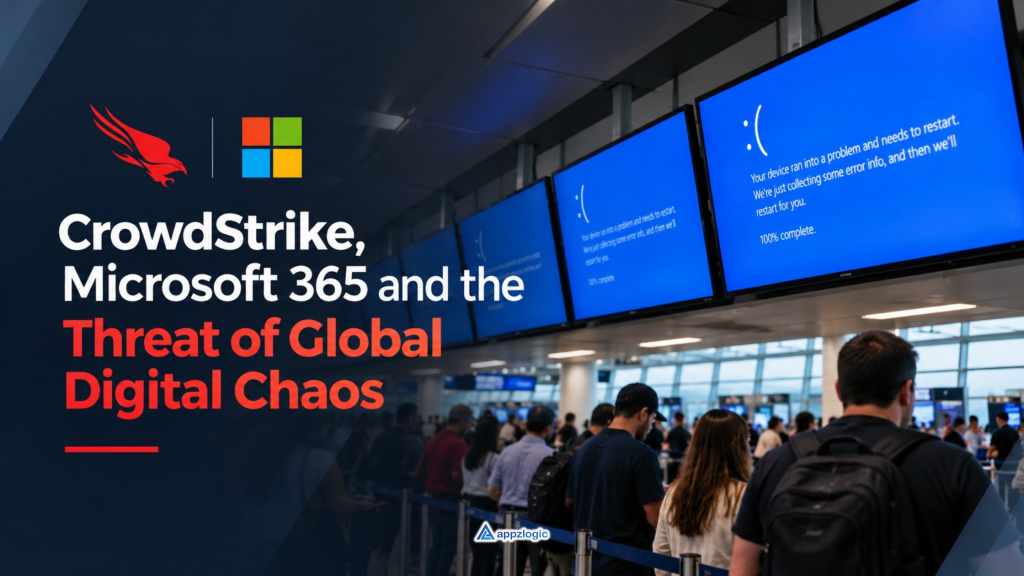
CrowdStrike, Microsoft 365 and the Threat of Global Digital Chaos
Flights grounded. Hospitals struggling to access critical systems. Banks facing disruptions. Emergency services affected. Government operations interrupted. Businesses losing billions of dollars. From the 2024 CrowdStrike crisis to the November 2026 Microsoft 365 outage, major technology failures have exposed just how vulnerable our interconnected digital world can be.
On July 19, 2024, a faulty CrowdStrike software update triggered a global IT crisis, affecting approximately 8.5 million Windows devices and disrupting essential operations across industries. Financial losses among major US companies alone were estimated at $5.4 billion, according to Parametrix.
Two years later, on November 12, 2026, the Microsoft 365 outage brought those concerns back into focus. Outlook, Teams and other connected services experienced widespread failures, disrupting communications across hospitals, police departments, courts, financial institutions, government agencies and businesses.
More than 7.4 million outage reports were recorded worldwide.
Both incidents originated from technical problems rather than cyberattacks. Yet the scale of the disruption raises a far more unsettling question.
If an accidental technical failure can disrupt essential services across the world, what could happen if cybercriminals deliberately exploited a similar crisis?
What Caused the Microsoft 365 Outage?
On November 12, 2026, Microsoft 365 users worldwide began experiencing serious connectivity problems. Emails stopped flowing, virtual meetings were interrupted, and organizations struggled to access services essential to daily operations.
According to Reuters, the disruption lasted more than 24 hours before Microsoft confirmed services had recovered on November 14. Downdetector recorded over 7.4 million reports worldwide, although these reports do not represent an equivalent number of unique affected users.
The consequences extended beyond workplace inconvenience. Schools, courts, police departments, hospitals and financial institutions experienced operational difficulties. Some organizations resorted to traditional communication methods, including telephone calls and fax machines.
Microsoft’s preliminary investigation linked the incident to a network infrastructure problem involving an earlier capacity upgrade and a subsequent network change. Servers became unexpectedly unavailable, placing additional pressure on the remaining infrastructure and affecting services connected to Exchange Online.
Microsoft confirmed that the incident was technical and reported no evidence of malicious activity.
But while the outage wasn’t caused by hackers, history suggests that technical failures can create opportunities for malicious actors.
CrowdStrike 2024: When a Software Failure Created an Opportunity for Hackers

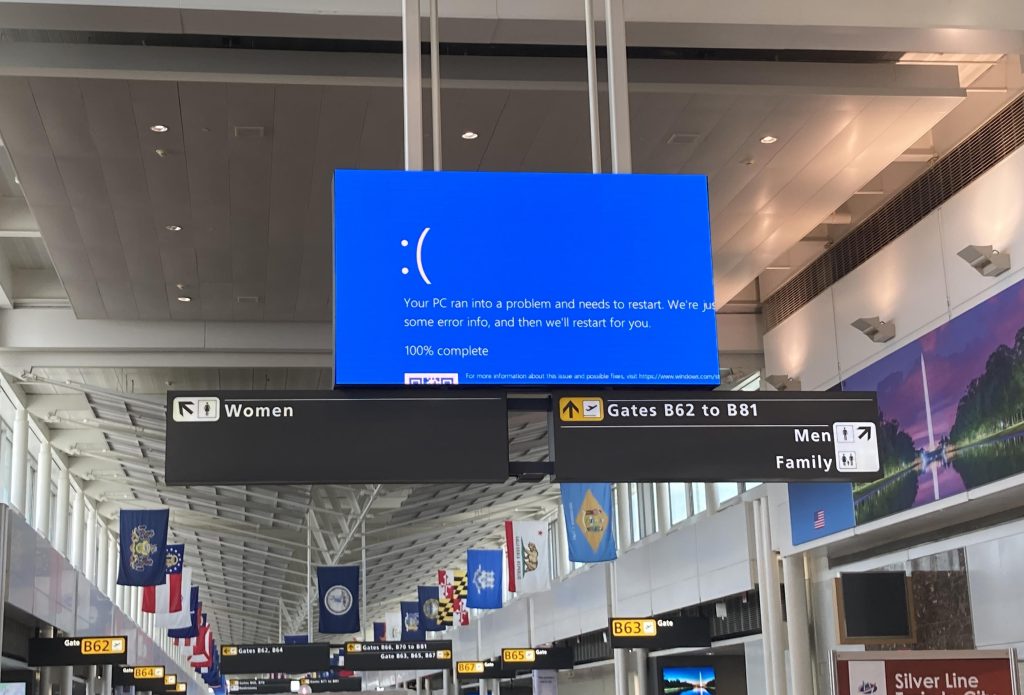
The CrowdStrike incident demonstrated how a single defective software update could disrupt systems across the world.
On July 19, 2024, an update to CrowdStrike’s Falcon security software caused millions of Windows computers to crash. Airports experienced extensive delays and cancellations, hospitals faced operational difficulties, and banking and retail services were interrupted.
Microsoft confirmed that approximately 8.5 million Windows devices were affected. Meanwhile, Parametrix estimated direct financial losses of $5.4 billion among US Fortune 500 companies, excluding Microsoft.
Yet the most concerning development wasn’t limited to the software failure itself.
Cybercriminals began exploiting the confusion surrounding the outage. Fraudulent support websites appeared, phishing campaigns targeted affected organizations, and malicious software was disguised as recovery tools.
The US Cybersecurity and Infrastructure Security Agency confirmed that threat actors were taking advantage of the incident. India’s CERT-In also warned about fake technical assistance, phishing emails and malicious recovery software.
With AI increasingly capable of generating convincing phishing messages, impersonating support personnel and automating fraudulent communications, such threats could become even harder to detect during future outages.
The original failure was accidental, but the cybersecurity threats that followed were deliberate.
It demonstrated that hackers don’t always need to cause a crisis to exploit one.
When Cyberattacks Become the Reason Systems Go Down
History also offers examples where cybercriminals were directly responsible for widespread technology disruptions.
In February 2024, Change Healthcare, a major American healthcare technology provider, suffered a ransomware attack linked to the ALPHV/BlackCat group.
The attack disrupted prescription processing, insurance claims and healthcare payments, affecting pharmacies and medical providers across the United States.
As Reuters reported, the disruption continued for days, exposing the healthcare industry’s dependence on shared digital infrastructure.
Another warning emerged in June 2017, when the NotPetya malware attack spread through corporate networks worldwide.
Global shipping company Maersk experienced extensive IT failures that disrupted international logistics and container terminal operations. According to its financial disclosures, the company estimated losses of approximately $200 million to $300 million.
These incidents demonstrate how cyberattacks against interconnected systems can produce consequences far beyond their original targets.
They also highlight why organizations must prioritize both infrastructure resilience and security. Regular application security assessments can help identify vulnerabilities in software, APIs and connected applications before attackers exploit them.
Could a Microsoft 365 Outage Create Cybersecurity Risks?
Consider a scenario where another major cloud infrastructure failure interrupts communications across businesses, hospitals, financial institutions and government agencies.
While technical teams struggle to restore services, cybercriminals begin distributing fraudulent recovery instructions, impersonating support teams or targeting organizations operating through emergency communication channels.
Employees might unknowingly disclose credentials, install malicious software or transfer sensitive information through unauthorized platforms.
If security monitoring and incident response communications are also disrupted, identifying malicious activity could become more difficult.
The potential consequences become particularly serious when essential infrastructure is involved.
Healthcare systems depend on digital records, medical equipment integrations and communication networks. Transportation services rely on scheduling and operational technology. Financial institutions require secure transaction processing, while emergency response and defence organizations depend on reliable communications.
A coordinated cyberattack against vulnerable critical systems could potentially disrupt essential operations and, in sufficiently severe circumstances, endanger lives.
This remains a hypothetical scenario. There is no verified evidence that the November 2026 Microsoft 365 outage enabled such an attack or compromised independent critical infrastructure.
However, previous incidents demonstrate why organizations cannot afford to treat service availability and cybersecurity as entirely separate concerns.
Is the World Becoming Too Dependent on Interconnected Technology?
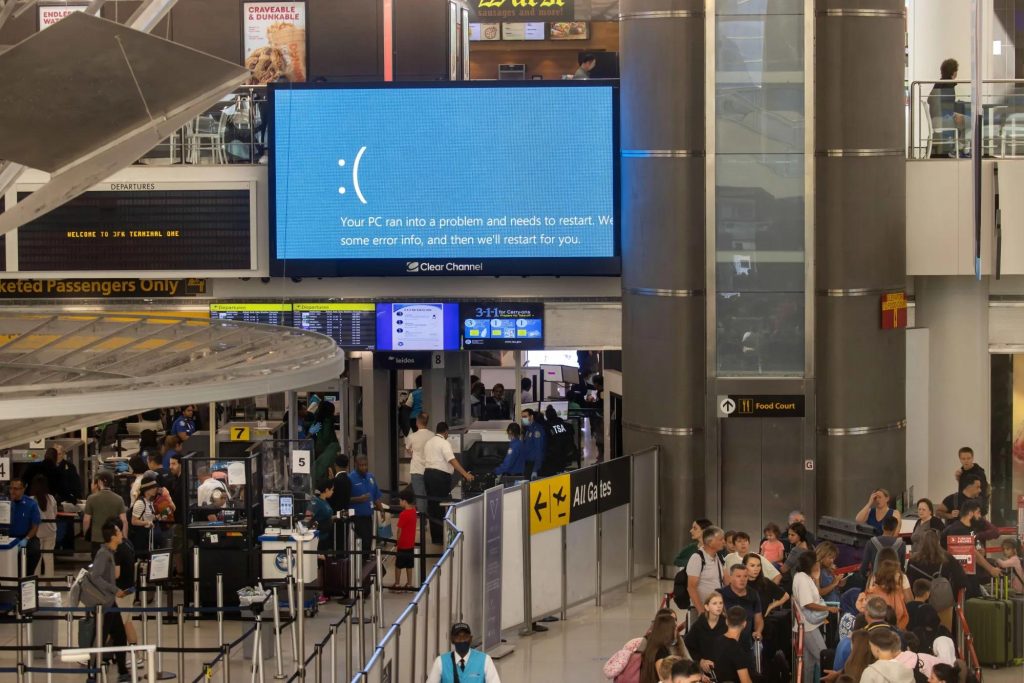
Cloud computing, automation and digital platforms have made global operations faster and more efficient. But they have also created complex dependencies between organizations, infrastructure providers and software services.
When a critical component becomes unavailable, the consequences may spread across numerous organizations simultaneously.
The Microsoft 365 and CrowdStrike outages revealed how technical problems could affect essential services. Change Healthcare and NotPetya demonstrated how deliberate cyberattacks could create similarly widespread disruption.
Businesses must therefore prepare for more than malicious intrusions.
Regular cloud security assessments can help organizations identify infrastructure vulnerabilities, configuration weaknesses and access control risks before they become serious security problems.
Similarly, managed cloud security supports continuous monitoring, threat detection and incident response, helping organizations strengthen their security posture.
However, security monitoring alone cannot prevent every service outage. Businesses also need reliable backups, alternative communication channels, infrastructure redundancy, employee cybersecurity awareness and tested disaster recovery procedures.
Security is not only about preventing unauthorized access. It is also about ensuring that essential systems remain resilient when something goes wrong.
What the Microsoft 365 Outage Teaches Us About Future Risks
The Microsoft 365 outage was not a cyberattack. Neither was the CrowdStrike incident in 2024.
But CrowdStrike showed how criminals could exploit confusion following a technical failure, while Change Healthcare and NotPetya demonstrated the destructive consequences of deliberate cyberattacks.
Together, these incidents reveal how vulnerable a highly interconnected digital world can become when critical infrastructure fails.
The next major disruption may begin with another software defect, a network configuration error or a malicious attack. What matters is whether organizations can maintain essential operations and respond securely when their systems become unavailable.
Because the greatest danger may not be the initial outage itself, but the vulnerabilities that emerge while everyone is trying to recover.
If an accidental technical failure can disrupt essential services across the world, how prepared are we for the day someone deliberately tries to make those systems fail?
Frequently Asked Questions
The Microsoft 365 outage began on November 12, 2026, following a technical problem associated with a network capacity upgrade and subsequent infrastructure changes. The issue caused servers to become unavailable and disrupted access to Outlook, Teams, Exchange Online and other connected services. Microsoft ruled out malicious activity as the cause.
No. Microsoft confirmed that the November 2026 outage was caused by a technical issue rather than a cyberattack. However, major service disruptions can create opportunities for cybercriminals to launch phishing campaigns, impersonate technical support teams or distribute malicious recovery tools.
Yes. Microsoft confirmed that services had recovered by November 14, 2026, following more than 24 hours of disruption. Outlook, Teams and other affected services were restored, although some users experienced delayed email delivery during recovery. Users can check the official Microsoft service status page for current updates.
Downdetector recorded more than 7.4 million outage reports worldwide during the November 2026 incident. However, these reports do not represent the total number of unique affected users. The disruption affected organizations across numerous countries, including businesses, hospitals, financial institutions and government agencies.
There is no confirmed evidence that the November 2026 Microsoft 365 outage involved unauthorized access or data theft. The incident primarily affected service availability. However, organizations should remain alert to phishing emails and fraudulent technical support messages that may exploit major service disruptions.
The CrowdStrike outage on July 19, 2024, was caused by a faulty update to its Falcon security software. Approximately 8.5 million Windows devices were affected, disrupting airports, hospitals, banks and other essential services. The incident was a software failure, not a cyberattack, but cybercriminals subsequently attempted to exploit the confusion.
Yes. Cybercriminals can take advantage of widespread technical disruptions by sending phishing emails, creating fake recovery websites and impersonating IT support personnel. During the 2024 CrowdStrike outage, the US Cybersecurity and Infrastructure Security Agency confirmed that malicious actors were exploiting the incident.
AI can help cybercriminals create convincing phishing messages, generate fraudulent support communications and produce realistic voice impersonations. During an outage, these techniques could make it harder for employees to distinguish legitimate recovery instructions from malicious attempts to steal credentials or distribute malware. There is no evidence that AI caused the November 2026 Microsoft outage.
A sufficiently severe cyberattack against critical infrastructure could disrupt hospitals, transportation networks, financial services and emergency communications. Previous incidents, including the Change Healthcare ransomware attack and NotPetya malware outbreak, demonstrate how attacks against interconnected systems can affect entire industries. However, a simultaneous worldwide shutdown of all such systems is not an established or inevitable outcome.
Businesses can reduce operational and cybersecurity risks by maintaining secure backups, alternative communication channels, tested disaster recovery procedures and employee phishing awareness programs. Regular cloud security assessments and application security testing can help identify security weaknesses, while business continuity planning helps organizations prepare for unexpected service disruptions.