Why Multi-Factor Authentication (MFA) Matters in Fintech: How It Strengthens Security, Ensures Compliance, and Prevents Fraud
Introduction
Fintech has changed how people manage their money, from paying bills to taking out loans and investing online. Digital banking, digital wallets, and online trading process millions of sensitive transactions daily. But as digital finance grows, so do the risks of cyberattacks, identity theft, and fraud. Today, fintech security is a top priority for financial institutions and technology providers.
Cybercriminals are getting smarter, so passwords alone are no longer enough to protect accounts and financial systems. Multi-Factor Authentication (MFA) is now essential for improving cybersecurity in banking, preventing fraud, and ensuring a secure digital experience.
What is Multi-Factor Authentication (MFA)?
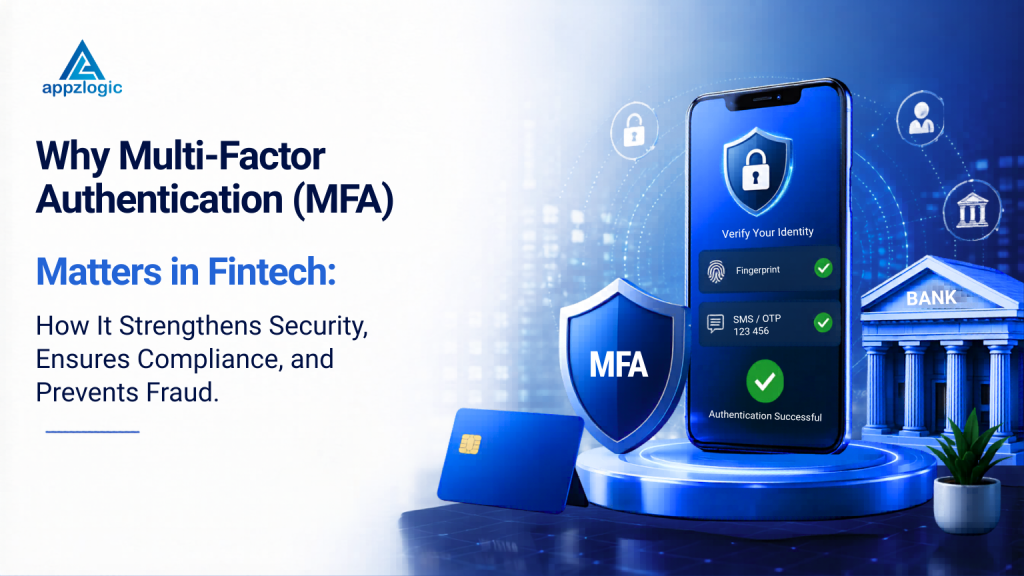
Multi-Factor Authentication (MFA) is a security method that requires users to verify their identity with two or more factors before they can access an account or system. MFA is an important solution in improving digital banking security and protecting sensitive financial information.
These authentication factors generally include:
- Something the user knows: passwords or PINs
- Something the user has: mobile devices, OTPs, or security tokens
- Something the user is: biometric authentication, such as fingerprints or facial recognition.
Unlike just using passwords, MFA adds an extra step to the identity verification process. This makes it much harder for cybercriminals to gain unauthorized access.
Why MFA is Essential for Fintech Companies
Fintech organizations process highly sensitive customer information, including:
- Banking details
- Credit card information
- Personal identification data
- Transaction records
- Investment portfolios
- Loan information
Just one security breach can cause big financial losses, legal penalties, and damage to a company’s reputation. It can also break customer trust and interrupt business. Implementing MFA for financial services enables businesses to strengthen financial data protection, ensure customer account security, and build long-term trust.
Rising Cybersecurity Threats in Fintech
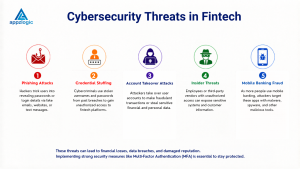
Phishing Attacks: Hackers trick users into revealing passwords or login details via fake emails, websites, or text messages.
Credential Stuffing: Cybercriminals use stolen usernames and passwords from past breaches to gain unauthorized access to fintech platforms.
Account Takeover Attacks: Attackers take over user accounts to make fraudulent transactions or steal financial data.
Insider Threats: Employees or third-party vendors with unauthorized access can expose sensitive systems and customer information.
Mobile Banking Fraud: As more people use mobile banking, attackers target these apps with malware and spyware. MFA helps stop these attacks by adding an extra step to user verification, making it harder for attackers to gain access.
Benefits of MFA in Fintech Security
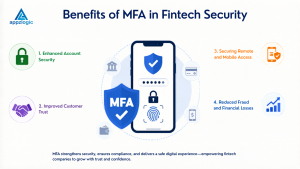
Enhanced Account Security
MFA greatly reduces the risk of unauthorized access to accounts. Even if hackers steal a password, they still need another way to prove their identity. This extra step protects customer accounts, banking apps, payment systems, and admin dashboards from credential theft. Passwords alone are easy targets for phishing and data breaches, but with MFA, even if a password is stolen, a hacker can’t log in without a second factor, such as an OTP or biometric scan. This makes phishing and credential-stuffing attacks much less likely to succeed.
Improved Customer Trust
Fintech customers care a lot about security. They want to know that their money and information are safe. Using MFA shows that a company takes security and privacy seriously. This helps fintech companies build customer confidence, improve their reputation, keep users, and encourage more people to use digital services. Customers are more likely to trust fintech platforms that prioritize security.
Securing Remote and Mobile Access
Today, fintech companies rely heavily on remote work, cloud services, and mobile banking apps.
MFA secures:
- Employee remote access
- Cloud-based financial applications
- Mobile banking apps
- Customer portals
- API access points
This helps stop unauthorized access from hacked devices or strange login attempts.
MFA and Regulatory Compliance in Fintech
Following rules and regulations is crucial in fintech. Financial companies must meet strict security and data protection standards. MFA helps fintech companies follow these rules and meet global compliance requirements.
PCI DSS Compliance
The Payment Card Industry Data Security Standard (PCI DSS) recommends strong authentication measures to secure payment card data.
MFA helps protect:
- Merchant systems
- Online transactions
- Administrative access
GDPR Compliance
The General Data Protection Regulation (GDPR) requires organizations to implement appropriate technical and organizational security measures to protect personal data.
MFA supports GDPR compliance by:
- Reducing unauthorized data access
- Strengthening identity verification
- Enhancing data security controls
PSD2 Strong Customer Authentication (SCA)
The European PSD2 regulation mandates strong customer authentication for electronic payments. MFA meets PSD2 requirements by combining knowledge factors, possession factors, and biometric verification.
SOC 2 and ISO 27001
Security frameworks like SOC 2 and ISO 27001 focus on controlling who can access systems and data. They help prevent unauthorized access, enhance security, and strengthen authentication.
Role of MFA in Fraud Prevention
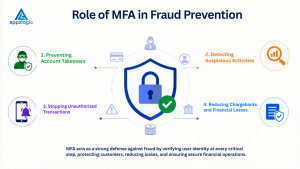
MFA lowers the risk of fraud in several ways.
Preventing Account Takeovers
MFA stops attackers from accessing accounts, even if they have stolen login credentials.
This prevents:
- Unauthorized transactions
- Fund transfers
- Data theft
- Account manipulation
Detecting Suspicious Login Attempts
Advanced MFA systems can identify:
- Unusual login locations
- Unknown devices
- Abnormal user behavior
- Multiple failed login attempts
This lets fintech platforms request additional proof or block suspicious activity when something seems off. Reducing Payment Fraud
MFA adds an extra step to verify identity before any financial transaction proceeds.
This minimizes risks associated with:
- Card fraud
- Digital wallet fraud
- Unauthorized payments
- Fake account access
Best Practices for Implementing MFA in Fintech
Use Adaptive Authentication
Adaptive MFA considers factors such as user behavior, device details, and login patterns to determine which security measures to use.
Enable Biometric Authentication
Biometric authentication is more secure and easier for users. Popular biometric methods include fingerprint scanning, facial recognition, and voice authentication. These methods boost security and make things easier for users.
Educate Users About Cybersecurity
Teaching customers about security is key to stopping phishing and social engineering attacks. Fintech companies should teach users about strong passwords, spotting fake login pages, the dangers of sharing OTPs, and safe mobile banking habits.
Secure API and Third-Party Access
Fintech platforms often use third-party MFA solutions for API authentication, vendor access, partner portals, and admin systems.
Continuously Monitor Authentication Activity
Monitoring logins in real time helps spot suspicious behavior. Fintech companies should use security analytics, login monitoring, risk scoring, and automated alerts.
Future of MFA in Fintech
As fintech evolves, MFA technologies are getting smarter and easier to use. AI-driven authentication, behavioral biometrics, zero-trust security, and passwordless authentication are shaping the future of digital finance security.
Businesses that invest in advanced authentication now will be better prepared to handle new cyber threats and to deliver secure digital experiences to customers.
Conclusion
Multi-Factor Authentication is now a must for fintech companies. With more cyber threats, advanced fraud, and strict rules, MFA is a key defense for financial systems. By implementing MFA, fintech organizations enhance cybersecurity compliance, enabling effective fraud prevention in fintech, protecting customer transactions, complying with regulations, and building customer trust.
In today’s digital world, investing in strong authentication is vital for business growth, resilience, and customer confidence.
At Appzlogic, we help businesses create secure fintech platforms that meet compliance requirements by leveraging advanced fintech cybersecurity solutions, authentication, and digital transformation services.