
Top Cybersecurity Challenges in Banking and How to Overcome Them
Growing Cyber Threat Landscape in Banking
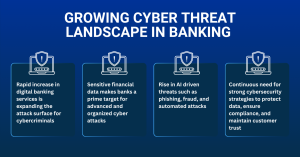
The banking and financial services sector continues to face constant pressure from cyber threats as more services move online. Customers rely on mobile apps, internet banking, and digital payment systems for daily transactions, which increases both convenience and risk. Cybercriminals target banks because of the sensitive financial data they manage. Institutions must continuously improve their cybersecurity strategies to protect data, maintain trust, and meet regulatory expectations. Strong and consistent security practices are necessary for long term growth and stability.
Increasing Phishing and Social Engineering Attacks
One of the most common and dangerous threats in banking is phishing. Attackers use fake emails, messages, or websites to trick users into sharing confidential details such as passwords, card numbers, or one time passwords. These attacks are becoming more advanced with artificial intelligence, making them look more realistic and harder to detect. Customers often struggle to identify fake communication, which increases the chances of fraud. Banks need to focus on awareness programs and advanced filtering systems to reduce such risks.
Rise of Ransomware Attacks
Ransomware attacks are rising in the financial sector and causing serious disruptions. Hackers lock access to important systems or data and demand payment to restore it. This creates operational challenges because banks depend on constant system availability. Even a short interruption can affect thousands of users and lead to financial losses. To manage this risk, banks should invest in data backup systems, network monitoring, and strong endpoint protection. Quick response strategies can help limit the impact of such attacks.
Insider Threats and Employee Risks
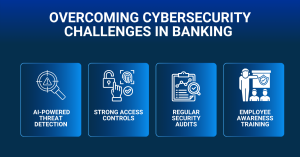
Insider threats are another major concern in banking security. These threats can come from employees who misuse access or make unintentional mistakes. Weak passwords, sharing login details, or clicking unsafe links can create serious vulnerabilities. In some cases, employees may misuse data for personal reasons. Banks must implement strict access control systems where employees only access necessary information. Regular training and monitoring help reduce human errors and improve security awareness.
Security Challenges in Digital Banking Platforms
The rapid growth of digital banking platforms has increased security concerns. Mobile applications, online systems, and payment gateways are now essential for customer interaction. If these systems have vulnerabilities, attackers can exploit them to gain unauthorized access. Weak application security or poorly managed APIs can become entry points for attacks. Banks must perform regular testing, code reviews, and vulnerability checks to keep platforms secure. Continuous updates also play an important role in maintaining safety.
Third Party and Supply Chain Risks
Banks often work with external vendors and service providers to deliver services. These partnerships can introduce security risks if third party systems are not properly protected. A compromised vendor system can create a pathway for attackers to access banking networks. Managing these risks requires careful vendor selection, regular audits, and clear security policies. A zero trust approach where every access request is verified can further strengthen protection across systems.

Regulatory Compliance and Data Protection
Regulatory compliance is a critical part of banking cybersecurity. Financial institutions must follow strict data protection laws and security regulations. Failure to comply can result in penalties and damage to reputation. Compliance also helps in maintaining strong security practices such as data encryption, identity management, and system monitoring. Banks need to stay updated with changing regulations and ensure that their systems meet industry standards.
Cloud Security Challenges in Banking
The use of cloud technology in banking has introduced new security concerns. While cloud platforms offer flexibility and cost benefits, they require proper configuration and monitoring. Incorrect settings can expose sensitive data to unauthorized users. Banks must work closely with cloud providers to ensure secure deployment. Strong authentication and access control measures are essential to protect data stored in cloud environments.
Role of Artificial Intelligence in Cybersecurity
Artificial intelligence is playing an important role in both cyber attacks and defense strategies. Attackers use AI to automate phishing campaigns and identify weaknesses faster. At the same time, banks use AI tools to detect unusual activities and prevent fraud in real time. This creates a continuous cycle where both sides improve their capabilities. Investing in AI based security solutions helps banks respond to threats quickly and effectively.
Importance of Customer Awareness
Customer behavior plays a key role in banking security. Many users are not fully aware of cybersecurity risks and may unknowingly expose their information. Using public networks or ignoring security warnings can increase the chances of fraud. Banks must educate customers about safe practices and encourage them to use security features such as two factor authentication. Awareness can significantly reduce risks and improve overall security.
Conclusion
Cybersecurity challenges in banking continue to grow with the expansion of technology. From phishing and ransomware to insider threats and supply chain risks, financial institutions face multiple security concerns. Addressing these issues requires advanced tools, strong policies, and continuous awareness. Banks must take a proactive approach by investing in modern security solutions and updating their systems regularly. Protecting customer data and maintaining trust should always remain the top priority.
Frequently Asked Questions
The biggest challenges include phishing attacks, ransomware, insider threats, third-party risks, cloud security issues, and vulnerabilities in digital banking platforms.
Banks are prime targets because they handle sensitive financial data and large volumes of transactions, making them highly valuable for cybercriminals.
AI helps detect unusual activities, prevent fraud in real time, and strengthen overall threat detection and response capabilities.
Banks can improve cybersecurity by adopting advanced security tools, regular system updates, employee training, and strong compliance practices.