What is Camunda and why is it used?
Overview of Camunda as a Workflow and Automation Platform
Camunda is a workflow and process automation platform that helps companies manage, run, and monitor business processes from start to end. It follows open standards and gives teams full control over how workflows behave. With Camunda, teams can design processes visually, automate tasks through rules, and connect different systems without relying on heavy development efforts. Banks, insurance firms, logistics companies, telecom companies, and many other industries use it to run operations that depend on process accuracy.
Camunda supports long-running workflows, approvals, human tasks, and system integrations. It manages each step in the right order and ensures that no task is missed. It also provides dashboards and logs so teams can track where a process stands and handle cases faster. Camunda fits well with enterprise technology because it works with Java, microservices, APIs, and cloud deployments. This makes it useful for companies that want strong process governance.
Why it is used?
Enterprises use Camunda because it solves the problems that traditional automation tools cannot. Here are the exact reasons, written in clear bullet points as you asked:
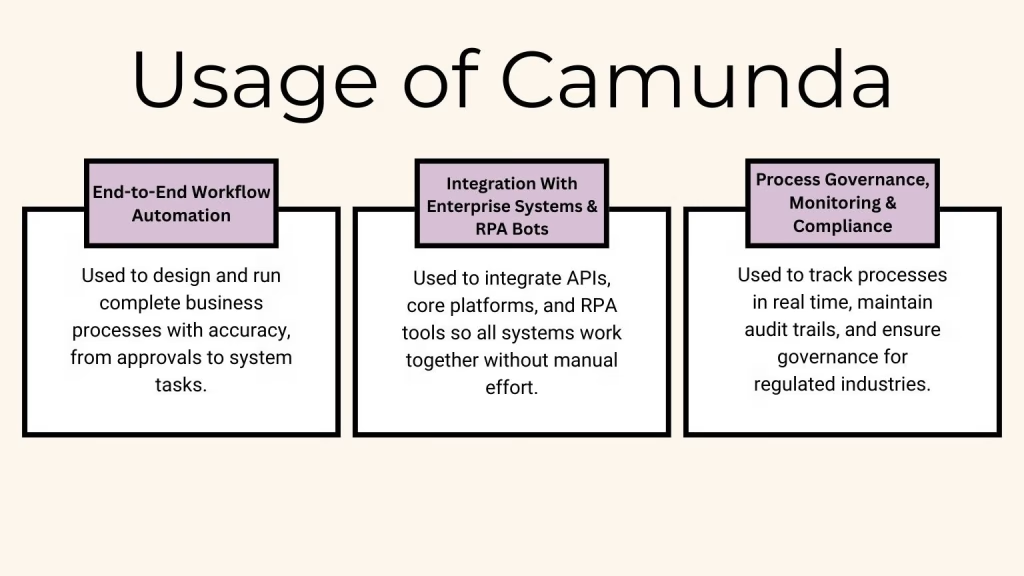
- To automate and control end-to-end workflows:Financial institutions, insurers, and telecom companies run workflows that include 10+ systems. Camunda centralizes and orchestrates the entireworkflow so nothing breaks.
- To reduce manual errors and improve compliance:According to Deloitte, human-driven financial workflows have error rates up to 25%, while automated workflows reduce errors to below 1%.Camundaenforces rules, validations, SLAs, and approvals with accuracy.
- To integrate backend systems, APIs, databases, and RPA bots:Camunda fits perfectly into enterprise architecture. It connects everythinglike CRM, core banking, ERP, policy systems, KYC platforms, payment gateways, and even RPA bots like UiPath or Automation Anywhere.
- To supportlong-runningand complex processes: Loan processing, customer onboarding, trade finance, claims processing, these workflows take minutes to days.
Camunda handles long-running workflows without losing state. - To provide full process visibility andauditing: Financial services depend on auditability. Camunda gives dashboards, process history, and logs that help with compliance audits and exception management.
- To scale automation across departments:As per Gartner, 80% of enterprises struggle to scale automation after starting with small pilots.
Camunda helps scale because it is lightweight, API-friendly, and based on open standards.
Role of BPMN in Camunda Process Modeling
BPMN plays an important role in Camunda because it serves as the visual format for process modeling. It helps teams design workflows through diagrams instead of long technical documents. Camunda uses BPMN to define the flow, assign tasks, add rules, and map decisions. When a BPMN model is deployed, Camunda executes it as a live workflow.
Using BPMN in Camunda gives process owners and technical teams a common view. Both groups can understand the flow and see how data travels between steps. This removes confusion and supports smoother implementation. BPMN makes it easier to review the process before automation and helps ensure compliance with business rules.
What Is BPMN (Business Process Model and Notation)?
BPMN stands for Business Process Model and Notation. It is a standard way of drawing process steps, decisions, events, and results. Companies use BPMN to design and document business workflows. The notation uses shapes such as tasks, gateways, and events to show how work moves from one point to another.
People prefer BPMN because it is clear and readable. It avoids misunderstandings and helps teams improve their operations by seeing the full picture of the workflow. BPMN works well for both manual and automated processes, which is why many automation platforms adopt it as a modeling standard.
Benefits of BPMN for Complex RPA Process Design
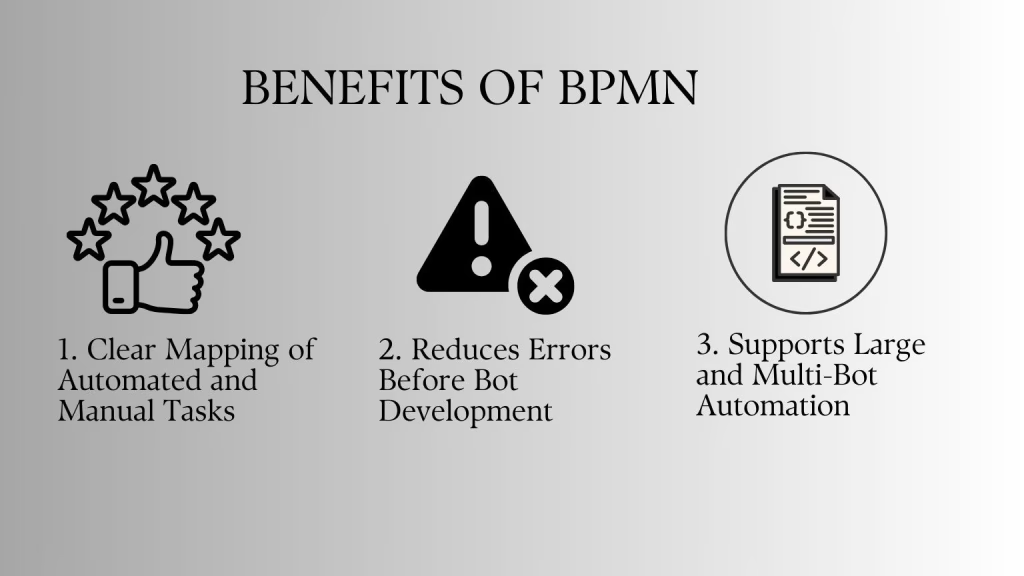
BPMN offers several benefits for RPA process design. It provides structure to processes that include many decision points or involve multiple systems. It becomes easier to identify which tasks should be automated with bots and which tasks need human involvement. BPMN gives RPA teams a blueprint that supports accurate bot development.
BPMN diagrams also reduce errors because teams can validate the flow before building bots. It helps them detect missing steps, data gaps, or incorrect decisions early. For large automation programs, BPMN creates consistent documentation, supports compliance checks, and makes it easier to maintain RPA processes over time.
What Is BPMN in Camunda?
BPMN in Camunda refers to how Camunda uses BPMN diagrams as executable process models. When a designer creates a BPMN model in the Camunda Modeler and deploys it, the platform runs it step by step. The symbols in the diagram are not only visual but also connected to real tasks, scripts, forms, and system calls.
This approach bridges the gap between design and execution. Teams can update the BPMN diagram whenever process rules change, and Camunda will follow the updated flow. This reduces development time and keeps workflows aligned with business operations.
What Is Robotic Process Automation (RPA)?
Robotic Process Automation is a technology where software bots perform repetitive and rules-based tasks. These bots follow clear instructions and interact with applications in the same way a human would. Companies use RPA for tasks such as data entry, invoice extraction, billing, reporting, and form submissions.
RPA helps reduce manual work and increases speed. It also lowers human errors because bots follow the same steps each time. RPA is useful for tasks where the process is clear and does not change often.
What Is RPA Process Automation?
RPA process automation refers to using bots to run business tasks from start to finish. It includes identifying the task, training the bot, testing the bot, and deploying it into production. These bots can work across systems like CRM, ERP, spreadsheets, websites, and desktop applications.
RPA process automation is helpful for high-volume tasks. It allows teams to save time and focus on activities that need judgment. Companies apply it in finance, procurement, HR, telecom, and customer service.
Camunda vs Robotic Process Automation
Camunda and RPA serve different purposes. Camunda manages workflow logic and controls the full process lifecycle. It handles approvals, routing, integration tasks, and multi-step workflows. RPA focuses on individual tasks performed by bots, mainly at the user interface level.
RPA alone does not manage end-to-end workflows. Camunda provides the structure for the overall journey, and RPA fills specific gaps where UI automation is required. When combined, they deliver strong automation because Camunda handles the flow and RPA automates repetitive steps inside the flow.
How Camunda Supports RPA Process Automation?
Camunda supports RPA by orchestrating bots and connecting them with business processes. It can call RPA bots using APIs, message queues, or connectors. The platform ensures that the bot runs at the right time, handles errors, and continues the process once the bot completes its task.
Camunda also helps manage exceptions. If a bot fails, the workflow can move the task to a human for review. This keeps the process stable and avoids disruptions. Camunda gives full visibility into where bots are used and whether they are performing correctly.
How RPA Process Works with BPMN?
RPA works well with BPMN because BPMN defines the process structure while RPA executes specific tasks inside that structure. A BPMN diagram shows when to launch a bot, what decisions follow the bot action, and how the process continues.
BPMN also helps organize complex automation journeys that include several bots. It provides a clear map that supports maintenance and scaling. With BPMN, teams know exactly where RPA fits and how it interacts with other tasks.
When to Use Camunda Instead of RPA Tools?
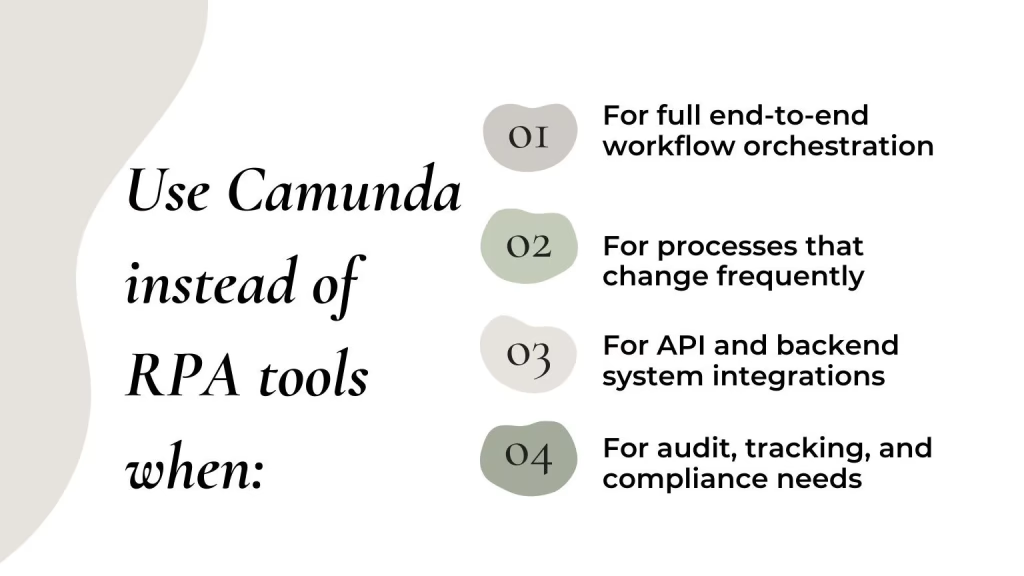
Camunda should be used instead of RPA tools when the goal is to manage full workflows, handle human tasks, or integrate backend systems. RPA is not suitable for workflows that change often or depend on data from APIs. Camunda is better when the workflow needs transparency, audit trails, and proper monitoring.
Companies should also select Camunda when they need flexibility in process logic or require long-running workflows. RPA tools can struggle in such cases, while Camunda maintains stability and supports changes easily.
What is the Role of BPMN in RPA Process Automation?
BPMN plays a guiding role in RPA automation. It helps teams define the exact place where RPA is needed and the conditions under which bots should run. It provides clarity for bot development and ensures that bot actions stay aligned with business rules.
By using BPMN, companies can plan, build, and manage RPA components with better accuracy. BPMN gives a long-term view of the automation strategy and supports compliance checks.
Conclusion
Camunda has become a preferred choice for enterprises that want full control over their workflows and automation programs. It gives teams a clear way to design, run, and improve processes using standards like BPMN, while connecting seamlessly with backend systems, APIs, microservices, and RPA bots. Financial services, insurance, telecom, and logistics companies rely on Camunda because it ensures accuracy, transparency, and end-to-end orchestration, capabilities that traditional automation tools cannot deliver on their own.
For organizations aiming to reduce errors, improve compliance, speed up decision-making, and scale automation across departments, Camunda provides a stable and future-ready foundation.
At Appzlogic, we help enterprises implement Camunda-based workflow automation that enhances process reliability, improves turnaround time, and strengthens governance across business operations.
Frequently Asked Questions
No, Camunda manages workflows, while RPA handles repetitive user interface tasks.
Yes. Camunda orchestrates the workflow and triggers RPA bots where needed.
BPMN provides a clear visual map that supports accurate automation design.
Yes. Many banks use Camunda for account workflows, loan approvals, KYC processes, and compliance.
Yes. BPMN helps document and manage large and complex automation journeys.